Equality in Higher Education Needs Clarity, Balance and Social Commitment: Not Just Legislation
The introduction of a University Grants Commission (UGC) framework aimed at promoting “equity” in higher education institutions reflects an important and necessary aspiration. Equality—samata—is not a narrow administrative goal but a foundational moral principle of a democratic society. In the Indian context, it carries historical, constitutional, and ethical weight. The commitment to equity and inclusion is also aligned with the vision articulated in the National Education Policy 2020, which identifies “full equity and inclusion” as the bedrock of all educational decisions. At the level of intent, therefore, the initiative appears both legitimate and timely.
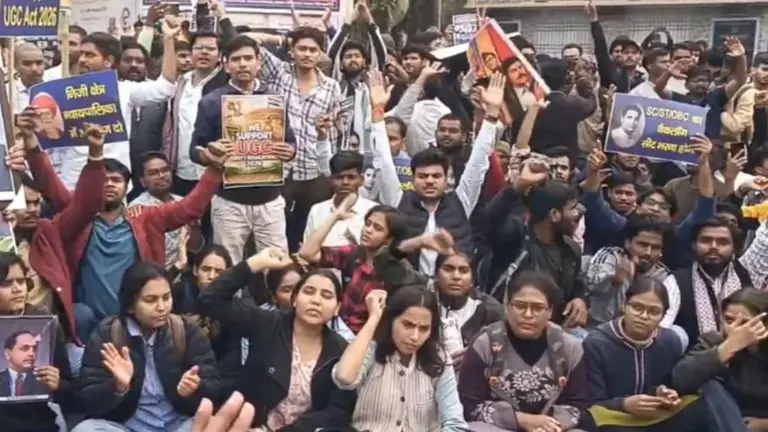
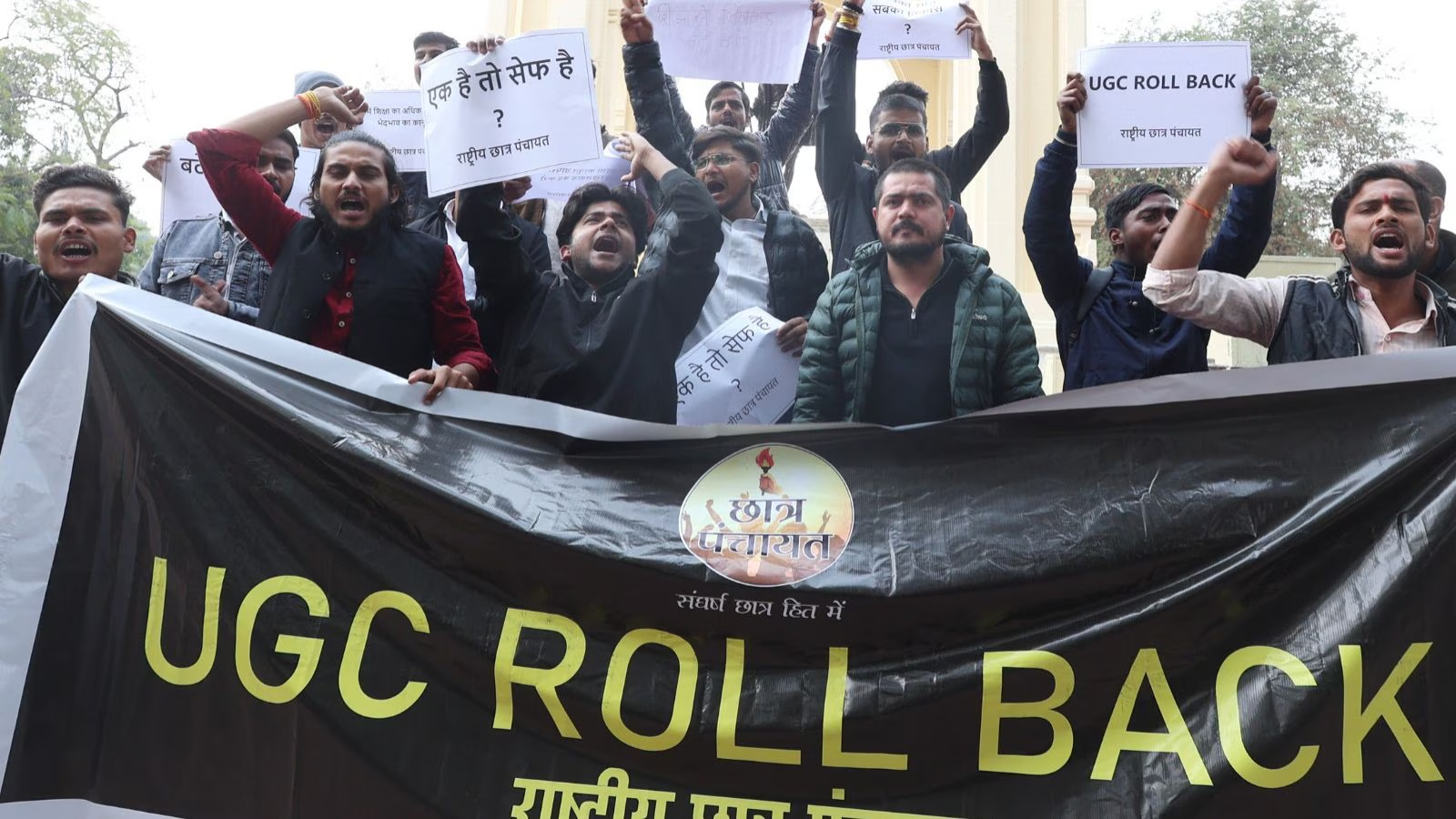
However, the strength of any law lies not merely in its intention but in its clarity, balance and enforceability. When examined from this perspective, the current framework raises significant concerns. The most pressing of these relates to definitional ambiguity, procedural imbalance, and the broader political and social context in which such measures operate. If the objective is to build trust and create inclusive campuses, then the law must inspire confidence across all sections of society—not suspicion or polarization.
The Problem of Definitional Obscurity
One of the core issues in the framework is the treatment of caste-based discrimination. There is no dispute that caste discrimination has historically shaped access to education, opportunity and dignity in India. Nor is there disagreement that institutions of higher learning must actively prevent such discrimination.
Yet, defining caste-based discrimination in operational terms is inherently complex. Unlike racial discrimination in certain historical contexts, which often involved demarcated binary. Caste in India is multi- layered, regionally varied and socially dynamic. In many parts of the country, hierarchies are not linear but contextual. This makes it difficult to codify discrimination in a way that is both comprehensive and precise. If the law leaves too many grey areas, it risks subjective interpretation.
For example, what constitutes social exclusion in a campus setting? Is choosing one’s own friend circle a personal liberty or a potential discriminatory act? When does interpersonal discomfort become actionable discrimination? These questions require objective standards. Without clearly articulated criteria, the line between social prejudice and personal preference may become blurred, potentially leading to overreach.
Laws dealing with sensitive social realities must be carefully drafted to avoid unintended consequences. If students and faculty feel that routine social interactions may be misinterpreted, a climate of caution and distrust may replace the intended atmosphere of openness.
Confidentiality and Accountability
The introduction of an equity helpline that guarantees anonymity to complainants can be seen as a progressive move. Many victims of discrimination hesitate to report incidents due to fear of backlash or social ostracism. Confidentiality encourages reporting and signals institutional seriousness.
However, confidentiality must be matched with safeguards against misuse. The framework appears to clearly outline consequences for institutions that fail to comply with its provisions. Yet, it is less explicit about the consequences for malicious or false complaints. A system that protects complainants but does not adequately address intentional misuse risks losing legitimacy.
This is not to suggest that false complaints are widespread or that they outweigh genuine grievances. Rather, it is a question of procedural balance. Justice must protect the vulnerable without presuming guilt. In the absence of clearly defined checks and balances, the perception—fair or not—that the system can be weaponized may undermine trust in the mechanism itself.
Data, Scale and Interpretation
According to the All India Survey on Higher Education (AISHE) 2021–22 data, India has over 45,000 colleges and more than 1,100 universities with projections suggesting that the number could cross 52,000 by 2025. This massive expansion reflects the democratization of higher education in quantitative terms.
However, scale complicates enforcement.If the number of officially recorded caste discrimination complaints appears small relative to the number of institutions. There are two possible interpretations: either such incidents are rare or they are underreported. Both scenarios are concerning, albeit for different reasons.
If incidents are rare, then targeted legal interventions must be proportionate and evidence-based. If underreporting is the issue, then the problem may lie not in the absence of law but in institutional culture, awareness and
In either case, better transparency in data presentation would strengthen public understanding. Disaggregated statistics— while sensitive—could help identify patterns without stigmatizing communities.
Policy must be driven by credible data, not perception or political expediency. When numbers are cited, they should illuminate rather than inflame.
The Political Context
It is impossible to ignore the broader political environment in which debates about caste, equity and higher education unfold. India’s electoral politics has long been influenced by identity-based mobilization. Affirmative action, reservation policies and protective legislation have been both instruments of social justice and subjects of intense political negotiation.
When a new legal framework is introduced without extensive public consultation or clear communication, skepticism is natural. Some may interpret it as an attempt to consolidate support among specific communities. Others may view it as compliance under judicial pressure. Whether these interpretations are accurate or not, perception matters.
For a policy to succeed in deeply divided contexts, it must appear above partisan calculations. That requires transparent drafting processes, broad stakeholder engagement and clarity about objectives.
Beyond Legislation: The Social Dimension
Perhaps the most compelling part of the debate is the recognition that legal reform alone cannot eliminate social discrimination. Seventy-five years after independence, the persistence of inequality—whether social or economic—signals the limits of legislative solutions.
The Indian Constitution unequivocally rejects discrimination in any form. Yet, constitutional morality does not automatically translate into social behavior. Education is not merely about compliance with rules; it is about internalizing values.
Campuses must become spaces of dialogue, empathy and shared experience. Diversity workshops, peer mentoring, interdisciplinary interaction and inclusive pedagogy may prove more transformative than punitive frameworks alone. If the educational system continues to prioritize employability over ethical formation, it risks producing skilled professionals without social responsibility.
The purpose of education should not be reduced to job acquisition. It must cultivate critical thinking, civic awarenessand mutual respect. Without this philosophical reorientation, even the most well-intentioned laws will operate in a reactive rather than transformative mode.
Economic Inequality: The Emerging Frontier Another dimension worth considering is the growing salience of economic inequality. While caste-based exclusion has deep historical roots, contemporary disparities increasingly intersect with economic status. Access to private coaching, digital infrastructure and urban networks often shapes educational outcomes as much as, if not more than, traditional social hierarchies.
This does not negate caste discrimination; rather, it complicates the picture. A holistic equity framework must address both social and economic vulnerabilities. Scholarships, need-based financial aid, mental health supportand academic bridging programs are essential components of inclusion.
If equity is framed solely through one axis of identity, it may fail to capture the layered realities of disadvantage. Intersectionality— recognizing how caste, class, gender and region overlap—should inform policy design.
Avoiding Polarization: Perhaps the most delicate challenge is avoiding the creation of new divisions while attempting to address old ones. Any perception that a law targets a particular community, even indirectly, can harden social boundaries. Higher education institutions thrive when intellectual exchange transcends identity markers.
The objective must be restorative rather than accusatory. Policies should focus on eliminating discriminatory behavior, not labeling groups. Clear language, objective criteria and transparent processes can prevent collective blame narratives.
At the same time, acknowledging historical injustices remains essential. Denial of structural inequities is as harmful as overgeneralization. The balance lies in affirming equal dignity without fostering collective guilt.
Institutional Responsibility: Universities must not treat compliance as a box-ticking exercise. Internal committees, grievance redressal cells and awareness campaigns should be functional, independent and credible. Faculty training is critical, as subtle biases often operate unconsciously.
Moreover, students must be empowered participants in shaping campus culture. Dialogue forums, diversity councils and collaborative initiatives can create ownership of the equity agenda. Government oversight should ensure standards without micromanaging academic spaces. Autonomy and accountability must coexist.
Conclusion: Clarity, Trust and Shared Responsibility
The aspiration for equality in higher education is non-negotiable. It is rooted in constitutional values and reaffirmed in policy visions such as the National Education Policy 2020. Yet aspiration must be matched with precision. A law that seeks to eliminate discrimination must itself embody fairness, clarity and proportionality.
Ambiguity breeds mistrust. Imbalance fuels polarization. Political framing weakens moral authority. If the objective is genuine inclusion, then policymakers must refine definitions, strengthen safeguards, enhance transparency and invest in social transformation alongside legal reform.
India’s higher education system is vast and expanding, as reflected in data from the All India Survey on Higher Education. Managing equity at this scale is a formidable task. But it is also an opportunity—to demonstrate that a diverse democracy can confront its historical inequalities without fracturing its social fabric.
Equality cannot be legislated into existence in isolation. It must be cultivated through education, reinforced by institutions, and sustained by collective commitment. The path forward lies not in choosing between law and society, but in aligning them. Only then can equity move from statute books to lived reality.