Ambedkar Jayanti: How Should the BJP and Modi Government Celebrate It?
Bharat Ratna Dr. B.R. Ambedkar stands among the greatest visionaries in Indian history. His thoughts and struggles were never confined to a single caste or community but aimed at the total reconstruction of Indian society and the establishment of a democratic republic based on liberty, equality, and fraternity. Every year, Ambedkar Jayanti is celebrated across India on April 14.
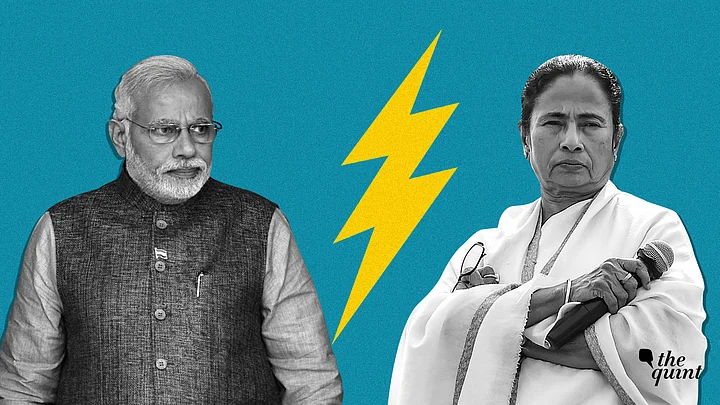
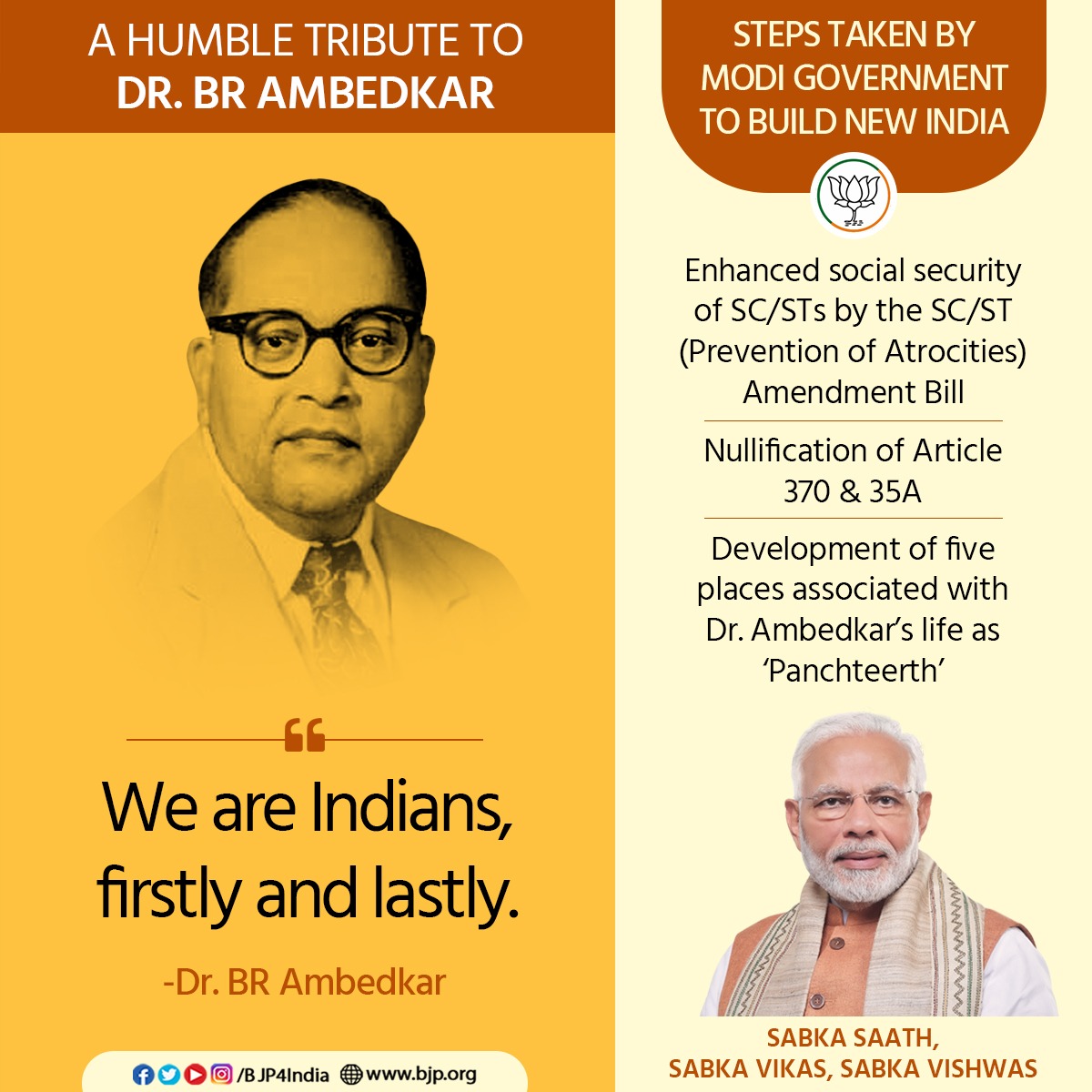
Prime Minister Narendra Modi and the Bharatiya Janata Party (BJP) routinely pay homage to Ambedkar, speak about the “Panchteerth” (five key pilgrimage sites linked to his life), and acknowledge him as the chief architect of the Indian Constitution.
But is Ambedkar’s legacy best honoured through statues, speeches, and garlands? Or should it find deeper reflection in governance, policy, and public ethos? The upcoming Ambedkar Jayanti should not be just another ceremonial observance; it must be a moment of national introspection, particularly for the BJP and the Modi government.
Don’t Reduce Ambedkar’s Ideology to a Narrow Identity
The BJP often hails Ambedkar as a “Dalit icon” or a “messiah of the marginalised.” While Ambedkar did devote his life to eradicating caste-based discrimination, his ideological reach extended beyond identity politics. He was a universal thinker who fought for the rights of all oppressed, be it women, labourers, religious minorities, or the economically deprived.
Ambedkar’s emphasis on constitutional morality, rationalism, and social democracy must be acknowledged in its full scope. BJP leaders should engage with his entire intellectual legacy and resist limiting him to electoral optics or symbolic inclusion.
Promote Education and Scientific Temper
Ambedkar famously asserted, “Education is the weapon of liberation.” Yet the current trajectory of India’s education system raises serious concerns. Escalating privatisation, rising tuition fees, shrinking scholarships, and reduced access for SCS, STS, and OBCS run counter to Ambedkar’s educational philosophy.
Moreover, Ambedkar promoted a scientific temper and encouraged rational inquiry. In contrast, today we see increased glorification of mythology masquerading as science. The government must ensure that educational institutions remain spaces of critical thought, free from dogma, and accessible to all, particularly those who have been historically oppressed.
Strengthening Reservations and Social Justice
Ambedkar viewed reservation as a constitutional mechanism to rectify historical injustices and ensure representation. However, the increasing contractualization of jobs and privatisation of public services are eroding the practical benefits of reservation.
The Modi government should not only uphold reservations in public employment and education but also consider extending affirmative action to the private sector. Representation of SCS, STS, OBCS, and minorities in universities, the judiciary, and decision- making bodies remains crucial.
Ambedkar’s dream of a just society cannot be realised without proportional representation.
Respect Dissent and Uphold Democracy
One of Ambedkar’s greatest concerns was the tendency of majoritarianism to eclipse individual liberty. Today, peaceful dissent is often labelled anti- national, and the space for independent thought is shrinking.
If the BJP truly seeks to honour Ambedkar, it must protect the right to dissent, ensure press freedom, and uphold the independence of democratic institutions. Democracy is not just about elections; it is about nurturing a culture where disagreement and debate are respected.
Stop the Political Weaponisation of Cultural Symbols
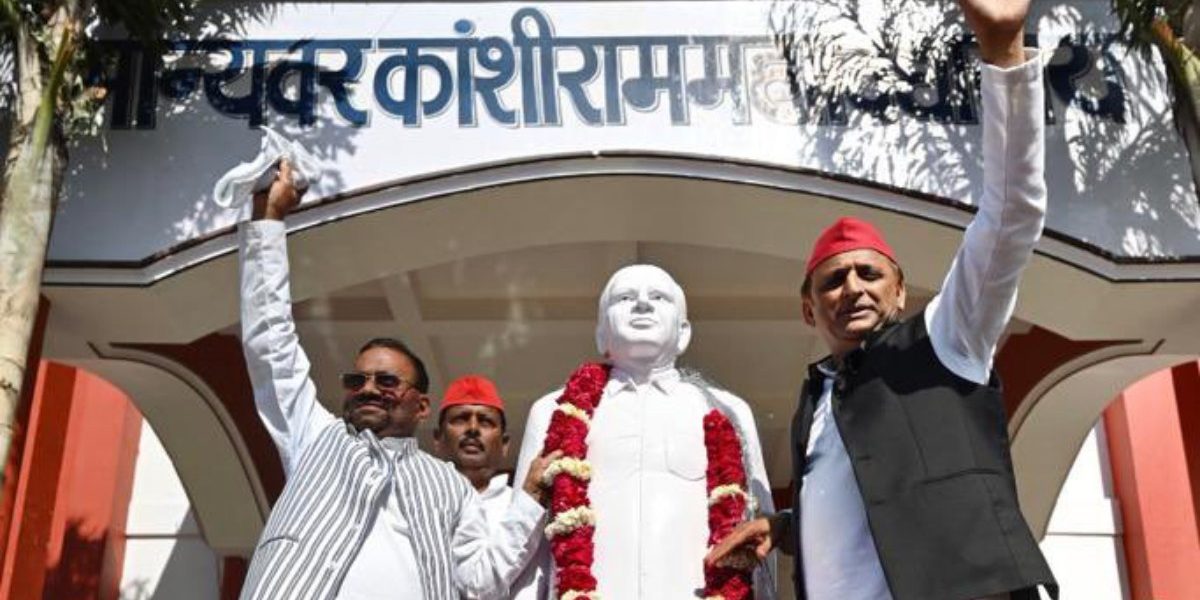
Garlanding Ambedkar statues and building memorials in his name are welcome, but these gestures become hollow if they are used to cover up regressive policies or social exclusion. Using Ambedkar’s image for electoral gains while sidelining his anti-caste ideology is deeply hypocritical. The BJP must introspect: is it celebrating Ambedkar’s name or embodying his values? His fight against Brahmanism and caste hierarchy must not be erased from the public narrative. Focus on Women’s and Workers’ Rights Ambedkar was an early feminist and a staunch advocate for women’s rights.
Through the Hindu Code Bill, he tried to grant women equal rights in inheritance and marriage, though it faced strong opposition.
Today, gender inequality remains pervasive. The Modi government should pursue policies that promote women’s education, employment, political participation, and protection from violence.
Similarly, Ambedkar was a champion of labour rights. Recent labour code reforms that weaken protections for workers need urgent review. Worker safety, minimum wage laws, and trade union rights must be reinforced to honour Ambedkar’s legacy.
Embrace Buddhism and Morality- Based Social Values
Ambedkar adopted Buddhism in the final years of his life, finding in it a moral framework grounded in compassion, rationality, and equality. His conversion was a rejection of caste-based Hindu orthodoxy and a call for a more humane society.
To pay a meaningful tribute to Ambedkar, the Modi government should invest in preserving Buddhist heritage sites, support the neo-Buddhist community, and promote ethical governance grounded in reason and compassion.
Integrate Ambedkar’s Legacy into National Discourse
Despite his towering contributions, Ambedkar’s works remain underrepresented in curricula and national debates. Texts such as Annihilation of Caste, The Buddha and His Dhamma, and The Problem of the Rupee offer powerful critiques of caste, religion, and economic exploitation.
The government should ensure these works are taught across universities and discussed in civil society. Research centres, think tanks, and public discourse should actively engage with Ambedkar’s thought, not as historical artefacts but as living blueprints for justice.
Conclusion: From Symbolism to Substance
Dr. Ambedkar was not merely the father of the Indian Constitution or a Dalit icon. He was a philosopher of modern India who advocated for the abolition of caste, the promotion of a scientific temper, and the establishment of a moral and egalitarian society.
On Ambedkar Jayanti, the BJP and Modi government must move beyond tokenism. They should use this occasion to recommit to Ambedkar’s vision through concrete policy shifts, inclusive governance, and public accountability.
Ambedkar does not need mere remembrance—he needs revival. His dream was of a nation where liberty, equality, and fraternity are not just constitutional ideals but lived realities. Turning that dream into action would be the most fitting tribute.