Change in Politics and Politics of Change: New Political Battlefield West Bengal
West Bengal’s politics has always been a complex field. Since 2011, the state has been governed by the Trinamool Congress (TMC) under the leadership of Mamata Banerjee, a tenure now spanning over 14 years. This prolonged period of rule has witnessed dramatic changes in the state’s political landscape, encompassing narratives of developmental successes, corruption scandals, and social unrest.
The First Phase: A Focus on Infrastructure and Development
The initial five years of the TMC government were predominantly focused on an infrastructure-centric development model, targeting both urban and rural areas. The priority was on constructing roads, improving transport systems, building bridges, and enhancing basic civic amenities. For instance, the construction of new flyovers and the development of rural roads significantly improved connectivity, integrating remote areas into the mainstream. This tangible improvement in daily life was a cornerstone of the TMC’s early appeal.
In the education sector, the establishment of approximately 18 new universities expanded access to higher education, opening new avenues for students. The health sector saw significant investment with the creation of around 17 medical colleges and over 50 general degree colleges. These projects aimed to elevate the standard of healthcare and education in rural belts, seemingly translating the TMC’s core slogan of “Maa, Maati, Manush” (Mother, Land, People) into action.
Furthermore, various agricultural and rural development schemes, such as the Kisan Credit Card and irrigation projects, were launched to improve the livelihoods of farmers. This comprehensive push for development helped the TMC consolidate its support base across a wide spectrum of society.
The Shadow of Scandals: Erosion of Credibility
However, these successes were soon overshadowed by a series of corruption scandals that severely damaged the government’s credibility. The Saradha Chit Fund scam, which came to light in 2013, and the Narada sting operation, unveiled in 2016, implicated senior ministers and party leaders.
The Saradha scandal, a massive Ponzi scheme, wiped out the savings of millions of ordinary citizens, shaking the state’s economic stability and eroding public trust. The Narada videos appeared to show several TMC leaders accepting bribes, leading to investigations by central agencies like the CBI and Enforcement Directorate. These events not only fuelled public disillusionment but also drastically soured relations between the state government and the central government led by the BJP, setting the stage for prolonged political and legal clashes.
Consolidation of Power and the Erosion of Opposition
Parallel to its development agenda, the TMC government systematically worked to establish an unquestionable power structure. From its early days, it employed strategies of co-option, pressure, and attrition to weaken opposition parties, primarily the Congress and the CPI(M). A significant number of opposition MLAs and local leaders were forced and pressurized to join TMC, creating a vast vacuum in opposition politics. This strategy solidified the TMC’s hegemony but also posed a challenge to the democratic framework, as a weakened opposition could not provide effective checks and balances. Critics argued that the TMC was following, and in some cases surpassing, the very playbook of political consolidation used by its Left Front predecessors.
As TMC’s rule continued, political tensions in rural Bengal escalated. The 2018 Panchayat (local body) elections were marred by widespread violence, allegations of booth capturing, and intimidation, leading to casualties and injuries. This violence further crippled the opposition’s grassroots presence, strengthening the TMC’s control but at a significant cost to democratic norms.
The Rise of the BJP: Filling the Void
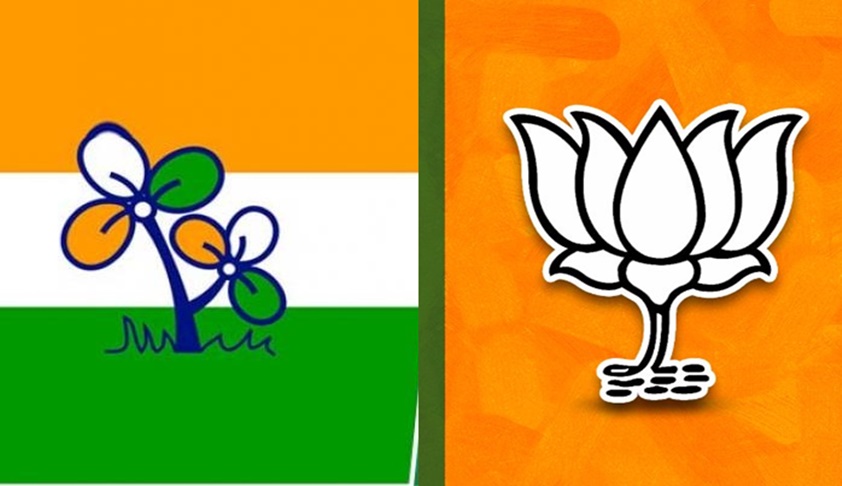
The vacuum in opposition space was swiftly filled by the Bharatiya Janata Party (BJP). The party’s strong presence at the Centre and its promotion of Hindu nationalist politics resonated with sections of the Hindu electorate. Allegations against Mamata Banerjee of “Muslim appeasement,” coupled with the perceived handling of some communal incidents, fostered resentment among sections of the rural Hindu populace, particularly among the lower and middle classes.
The decline of the Left and Congress provided the BJP with a historic opportunity. The 2019 Lok Sabha elections marked a tectonic shift: the BJP won 18 of the state’s 42 parliamentary seats, pushing its vote share beyond 40%. The Congress and the Left Front were reduced to marginal players, their vote shares collapsing. This election effectively bipolarized Bengal’s politics, introducing a potent mix of religious identity and nationalistic rhetoric previously unseen in the state’s post-independence history.
The 2021 Verdict and Shifting Strategies
The 2021 Assembly elections were a fiercely contested battle. Despite the BJP’s massive campaign, Mamata Banerjee led the TMC to a resounding victory, securing 213 seats. This win was attributed to a near-complete consolidation of the Muslim vote behind the TMC (fearing the BJP) and the party’s retention of significant support in South Bengal and among sections of the Hindu electorate, particularly women beneficiaries of state schemes. The BJP, though becoming the main opposition with 77 seats, failed to cross the finish line. The Left and Congress were nearly wiped out.
However, victory did not simplify Mamata Banerjee’s political challenges. Her government has been besieged by massive allegations of corruption and maladministration. Incidents of political violence, murders, rape cases, and communal clashes have continued, keeping the administration under constant scrutiny. High-profile cases like the 2024 rape and murder at RG Kar Medical College and Hospital and the massive school teacher recruitment scam have exposed administrative failures and fuelled public anger, providing ammunition to the opposition.
But Mamta is a shrewd and experienced politician. She projected herself as a victim of opposition’s conspiracy. She reclaims her political supremacy over West Bengal in 2024 by promoting counter narrative. In response to the BJP’s Hindu nationalist push, Mamata Banerjee has subtly adopted a strategy of “soft Hindutva”—participating prominently in Hindu festivals, overseeing temple constructions (like in Digha), and presenting herself as a protector of Hindu interests within a Bengali framework. Simultaneously, she has aggressively championed Bengali sub-nationalism (Bangla Asmita). By positioning herself against “Hindi imposition” and highlighting Bengali language, culture, and heritage, she has crafted a counter-narrative to the BJP’s pan-Indian Hindu nationalism. This has garnered support from a section of the urban and rural intelligentsia, including liberal and Left-leaning intellectuals, artists, and writers.
External Factors and New Polarizations
On the other hand, after the regime change in Bangladesh in August 2024 (the fall of Sheikh Hasina), violence against Hindus has increased. This has had a deep impact on politics in West Bengal. Reports of riots in Murshidabad and other border areas, and frequent news about attacks on Hindus in the mainstream media, are helping the BJP gain new political ground. Senior BJP leaders are expressing concern about instability in Bangladesh and illegal infiltration, and these political messages are strengthening Hindutva politics in Bengal. At the same time, the BJP’s strong stand against illegal Bangladeshi Muslim migrants is becoming popular among its target voters.
The competing narratives around the Citizenship Amendment Act (CAA) and the National Register of Citizens (NRC) are central to this battle. The BJP frames them as necessary measures against illegal immigration, while the TMC portrays them as discriminatory tools that could harass Bengali-speaking citizens, including Hindus. The 2025 Special Intensive Revision (SIR) has become a new flashpoint, with the TMC alleging it is a disguised NRC and the BJP defending it as a routine cleanse of the voter list. This debate has turned a bureaucratic exercise into a high-stakes political war, setting the tone for the crucial 2026 Assembly elections.
The Floundering Traditional Opposition and New Entrants
Amidst this TMC-BJP duel, the traditional opposition—the Congress and the Left Front—remains in a state of disarray and irrelevance. Their presence is limited to sporadic urban protests and minimal media visibility. Talks of a Congress-Left alliance are uncertain and unlikely to alter the binary contest in the near term.
A potential new variable emerged in late 2025 with suspended TMC leader Humayun Kabir announcing the construction of a Babri Masjid in Murshidabad and forming a new party. His aim to unite anti-TMC and anti-BJP Muslim forces, possibly in alliance with parties like Asaduddin Owaisi’s AIMIM or the Indian Secular Front (ISF), could splinter the Muslim vote in key districts, potentially affecting the electoral calculus.
Conclusion: The Stakes for the Future
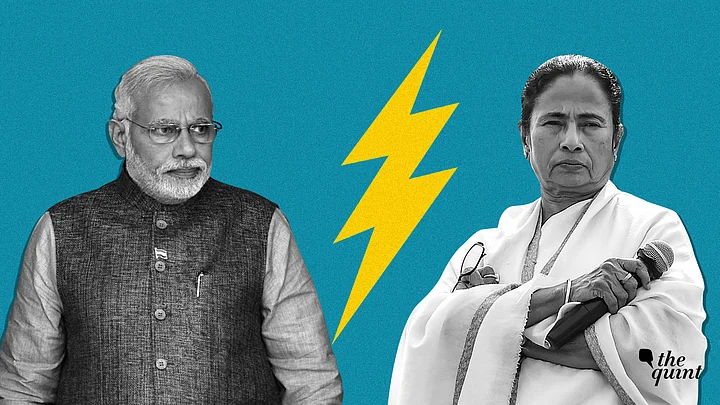
In conclusion, West Bengal’s politics is at a complex crossroads. The TMC administration is grappling with deep-seated issues of corruption, administrative paralysis, and widespread discontent, even within its traditional Muslim support base. Prime Minister Narendra Modi’s recent description of TMC rule as “Maha Jungle Raj” (law of the jungle) underscores the intense political warfare.
Yet, Mamata Banerjee’s political resilience cannot be underestimated. Her government’s direct welfare schemes for women, like Lakshmir Bhandar, have created a formidable vote bank. The fear of the BJP continues to drive a significant section of Muslim voters towards the TMC, while her Bengali sub-nationalist plank retains appeal.
The coming months will be decisive. The situation in Bangladesh, the management of social tensions, the implementation of CAA, and the outcome of the electoral rolls’ revision will critically shape the political trajectory. In this high-decibel political conflict, pressing issues of economic development, industrialization, and youth employment risk being overshadowed, posing the most significant long-term challenge for the state, regardless of who holds power. The 2026 elections will not just be a verdict on a government, but a defining moment for the social and political fabric of West Bengal.