Unsafe Women in the Land of Durga Devotees
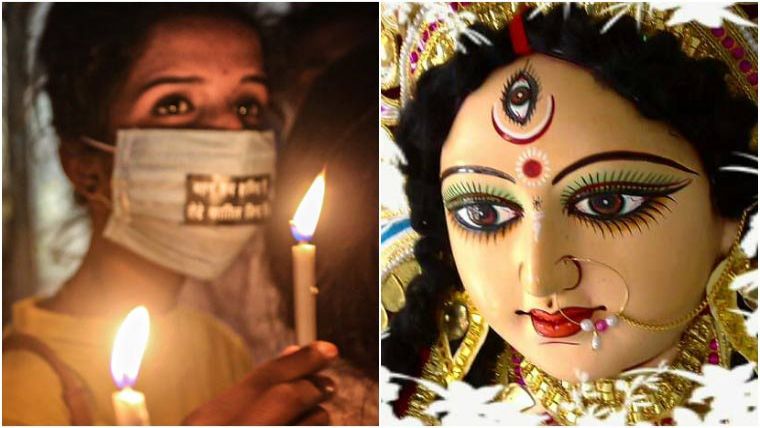
Bengal has historically been a region of Shakti worship, where Durga and Kali are revered. However, this picture seems to be changing in recent years. Whether it’s the case of the female doctor raped at RG Kar Hospital or the case of the 14-year-old minor in Hanskhali, numerous such incidents have come to light, raising serious concerns about women’s safety in West Bengal. Governments make many claims about women’s safety, but the impact is not visible on the ground. In many cases, the police themselves harass the victims to such an extent that they prefer to remain silent rather than file a complaint. In society, too, women who are victims of rape are viewed differently. Caught between mental and social trauma, most women either choose to remain silent or commit suicide.
According to the latest reports from the National Crime Records Bureau (NCRB), Kolkata has been ranked among the safest cities for the fourth consecutive time. West Bengal government minister Shashi Panja, while speaking to the media, said that “the NCRB data vindicates our claim that Kolkata is a safe city and debunks political claims from opponents. Cm mamata Banerjee has stressed repeatedly that there should be zero tolerance to crime.”
On one hand, the West Bengal government is patting itself on the back, citing NCRB data, while on the other hand, the National Annual Report and Index on Women’s Safety tells a completely different story. According to a survey conducted across 31 different cities in the country, involving 12,770 respondents, Kolkata, like Delhi, is one of the most unsafe places for women.
There is a huge discrepancy between the statistics and the ground reality. According to the NCRB report, only 83.9 cognizable offenses per lakh people were registered in Kolkata, which is the lowest among major cities in the country with a population of 2 million or more.
The father of R G Kar hospital rape victims father criticised the NCRB report, stating that it was prepared based on paperwork rather than actual conditions. He said “The National Crime Bureau released a report claiming Kolkata is the safest city in India. However, the people who made this report did not base it on ground realities; they relied solely on paperwork. In Kolkata, at least 90 per cent of incidents are not registered as FIR cases. At our local police station in Gola, a girl was brutally beaten, and no one knows about it yet. This incident occurred three months ago, and such incidents happen daily in Kolkata. Nothing is brought to light. Even a six-month-old girl is not safe here. The report made by the Bureau, sitting in their offices, is clueless about the reality. Educated people in our country are misleading everyone. No one is safe in Kolkata–not a man, not a girl,”
The mother of the RG Kar Medical College victim also expressed grief and questioned over the lack of security in Kolkata, she stated, “If there was proper security, my daughter, who was a doctor, would have been safe in her hospital. She was brutally beaten and killed, and her body was found in the hospital, yet no one knows the full truth. This kind of injustice occurs frequently. I believe around 200 such incidents have occurred in a year. It has happened in law colleges and it’s happening everywhere, every day. There is no security; it is not safe. Even when incidents occur, they are not properly reported or addressed due to widespread corruption. These issues have been ongoing for a long time. For us, it’s been a year and two months of pain. Wherever such incidents happen, we try to stop them, but the system fails us.”
Following the R.G. Kar incident, a case of rape of a 24-year-old female student of South Kolkata Law College came to light in June this year, which once again raised questions about women’s safety. A student leader from the ruling party was named in this case. Then, the gang rape of a medical student in Durgapur further intensified the political turmoil. Addressing the media after the incident, Chief Minister Mamata Banerjee said that “especially girl child at night time…they should not allowed to come outside. They have to protect themselves also.” She also added that “in Bengal we have zero tolerance (against such crimes) and I appeal to the boys and girls who come to study here not to venture out at night. This is because the police are not aware who is coming out (of hostels) when.”
A chief minister of a state who also holds the home portfolio – such a statement from her would be considered insensitive. Mamata Banerjee made a similar statement when a 14-year-old minor was gang-raped in Hanskhali, in which the son of a leader from her own party was implicated. At that time, Mamata Banerjee said from a public platform that What has happened is not right.I condemn it.The police have arrested the accused.But the opposition parties and a section of the media are trying to give a political twist to the entire event.I have received the news that there was a love affair between the accused and the victim.So why come to a conclusion before the investigation is completed,”
These incidents raise serious questions about women’s safety in Kolkata and also reflect the prevailing political climate. In all the cases, from Sandeshkhali onwards, individuals with political connections appear to be involved. The opposition has been consistently critical of these incidents, yet such events continue unabated, even in a state where goddesses are worshipped. Since Mamata Banerjee holds the Home Department portfolio, the direct question is for her: how long will such incidents continue? Why is the government’s rhetoric not reflected in reality? The statements made by Mamata Banerjee herself also raise questions about whether she is truly sensitive to women’s safety. These are the incidents that have come to our attention. There are countless other incidents that have never been reported. Harassment of women on the streets, in buses, and on trains is a daily occurrence. It is now becoming a common feature of this city.